Dust Masses from Kazakhstan Also Affecting Tashkent's Air Pollution, Hydrometeorological Service Says
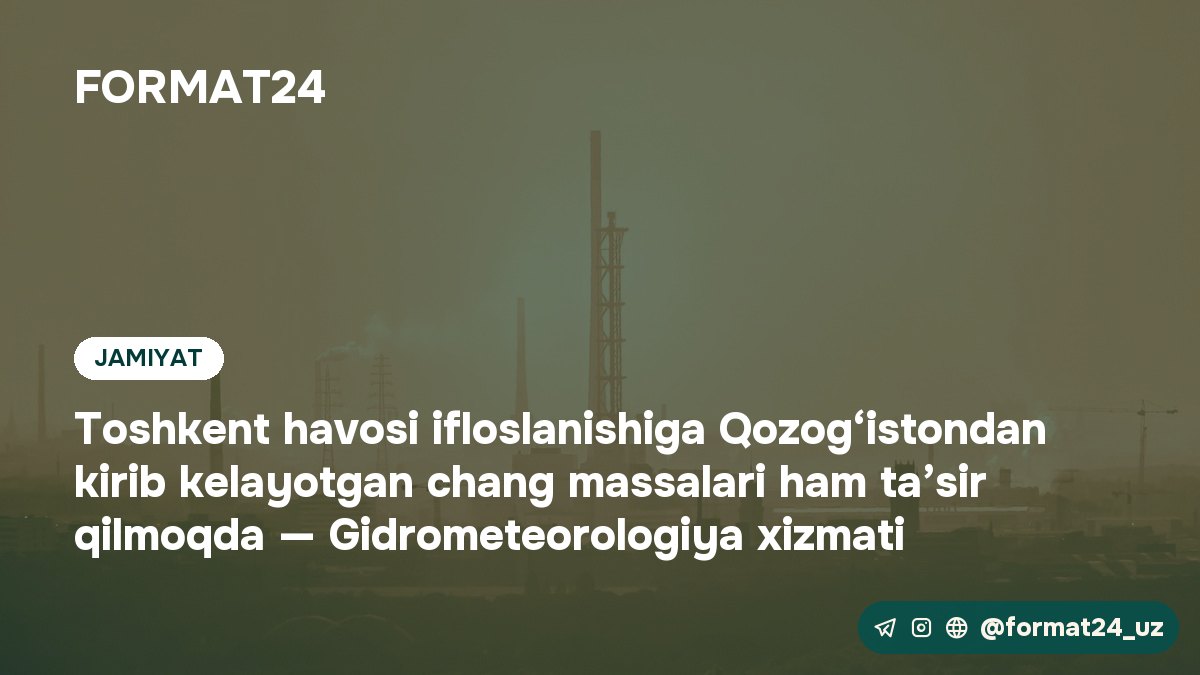
No precipitation has been observed in the capital over the past five days, wind speeds have been relatively low, and air exchange has been sluggish. This is making it harder for pollutants to disperse in the city's atmosphere.
Additionally, transboundary dust masses from the territory of Kazakhstan are moving toward Tashkent Region and Tashkent City with air currents.
According to Uzhydromet, automatic monitoring stations in the capital have not recorded a significant increase in pollutant concentrations. However, results obtained at border stations on 17–21 November 2026 showed high levels of PM2.5 and PM10 dust particles. The service assessed these indicators as one of the key evidence that dust masses are arriving from outside areas.
The highest readings during this period were recorded at the "Sofiya" and "Green University" border stations.
For reference, local factors affecting air quality include emissions from motor vehicles, construction sites, and industrial enterprises.
Source: Gidrometeorologiya xizmati